Get Edition 1 now
AUD $14.99 launch promo
Instant PDF download after Stripe checkout. A backup download link is emailed to the checkout address.
Secure checkout by Stripe. Digital delivery is handled by the Shameless Visuals checkout flow.
Edition 1 | Aurora Hunter's Field Guide
If you're checking forecasts from Adelaide or anywhere in southern Australia, this is the low-friction path: use the free checklist for tonight's decision, then keep the paid PDF for settings, planning and field notes.
Instant PDF download after Stripe checkout. A backup download link is emailed to the checkout address.
Secure checkout by Stripe. Digital delivery is handled by the Shameless Visuals checkout flow.
Not ready to buy yet? Get the quick field checklist first so you can make a cleaner call before driving out.
Reading Kp is the easy part. Focusing in the dark, finding clean skies, choosing the right exposure, and coming home with files worth editing is where most aurora shots die. Download the guide before you leave, because a lot of the good aurora spots have terrible reception.
The live page tells you what is happening. The guide helps you make the call, pack the right gear, choose the right spot, and come home with something worth editing.
If the Kp is climbing and the sky is clearing, grab the guide now so the settings, locations and field checklist are ready when you leave. Launch price ends 31 July 2026, then it goes back to AUD $29.
Most people think they need to head to Iceland or Norway to see the Northern Lights. Truth is, the southern hemisphere has its own version — the Aurora Australis — and it’s every bit as incredible. Here in South Australia, it’s possible to see and photograph it without leaving the state. With the solar cycle peaking through 2026, now’s the time to plan. And while aurora chasing is very different from a headshot session in Adelaide, or even shooting real estate photos, the same principles apply: preparation, patience, and an eye for light.
(Updated June 2026)

The Aurora Australis happens when solar storms send charged particles slamming into Earth’s atmosphere, creating those eerie green, pink, and purple curtains of light across the horizon.
If you’ve ever worked through a corporate event in Adelaide or been asked to shoot a last-minute graduation at Uni of Adelaide, you’ll know the feeling: you prep for hours, sometimes nothing happens, but when it does, you need to be ready to nail it instantly.
Season: Winter is best. Long nights and cold, crisp skies.
Time: Midnight to 2 AM is prime, but I’ve had luck as early as 9:30 PM.
Solar Activity: Right now, the sun is chucking tantrums left and right — that’s great news for aurora hunters.
Moon Phase: Dark nights are best, but sometimes a bit of moonlight can add atmosphere.
Chasing auroras feels a lot like lining up a wedding shoot in the Adelaide Hills. You can plan everything down to the last detail, but Mother Nature still has the final say.

This guide is your cheat sheet for planning an aurora chase. It’s based on solar activity forecasts, moon phases, and a little educated guesswork.
📌 Tip: Aim to head out 1–2 nights either side of the forecast peak dates, just in case the storm arrives early or late.
| Planning window | Best dark-sky date | Why it matters | Long-range chance | Moon impact | Best viewing locations |
|---|---|---|---|---|---|
| 12-16 July 2026 | 14 July | New moon, long winter nights, strong current solar-cycle tail. | Moderate | Excellent. New moon at night in SA. | Tasmania, Victoria, South Australia, WA south coast |
| 11-15 August 2026 | 13 August | Deep winter darkness and a clean moon window. | Moderate | Excellent. New moon before dawn. | Tasmania, Victoria, South Australia, WA south coast |
| 9-13 September 2026 | 11 September | Close to the spring equinox, which is historically a stronger aurora season. | Moderate to strong | Excellent. New moon near midday, dark evenings either side. | Tasmania, Victoria, South Australia, WA, southern NSW if the storm is strong |
| 9-13 October 2026 | 11 October | Still in the equinox shoulder, useful if a CME lines up with Earth. | Moderate | Very good. New moon early morning. | Tasmania, Victoria, South Australia, WA south coast |
| 7-11 November 2026 | 9 November | Shorter nights, but a clean dark window if live Kp and Bz cooperate. | Lower to moderate | Excellent. New moon near evening. | Tasmania first, then Victoria and SA on stronger storms |
| 7-11 December 2026 | 9 December | Summer makes timing harder, but the moon window is clean. | Lower | Good. New moon late morning, darker late-night skies. | Tasmania, southern Victoria, SA coast on strong storms |
| 6-10 January 2027 | 8 January | Summer dark-sky window. Watch live Kp, Bz and cloud more than the calendar. | Lower | Good. New moon date, minimal moon glare. | Tasmania, southern Victoria, South Australia on strong storms |
| 5-9 February 2027 | 7 February | Dark moon window heading toward the stronger autumn season. | Lower to moderate | Excellent. New moon occurs overnight in SA. | Tasmania, Victoria, South Australia, WA south coast |
| 6-10 March 2027 | 8 March | Autumn equinox month plus new moon, usually one of the better planning windows. | Strong | Excellent. New moon in the evening. | Tasmania, Victoria, South Australia, WA, southern NSW if the storm is strong |
| 5-9 April 2027 | 7 April | Equinox shoulder with a dark moon window. | Moderate to strong | Excellent. New moon morning, dark evenings nearby. | Tasmania, Victoria, South Australia, WA south coast |
| 4-8 May 2027 | 6 May | Longer nights return, with a clean dark-sky window. | Moderate | Excellent. New moon evening. | Tasmania, Victoria, South Australia, WA south coast |
| 3-7 June 2027 | 5 June | Winter darkness gives weak displays more room to show up in-camera. | Moderate | Excellent. New moon before dawn. | Tasmania, Victoria, South Australia, WA south coast |
Long-range dates are planning windows, not aurora promises. The final call still comes from live Kp, Bz, solar-wind speed, cloud and your horizon.

Wide skies, ocean reflections, and not much light pollution. My personal favourite.
Close to Adelaide, with beaches that give you wide horizons. Perfect if you want to combine aurora chasing with a short getaway.
Remote, rugged, and usually dark enough for perfect skies. Same place I’ve seen incredible spots for boudoir photography in boutique hotels.
Rare but possible — especially during strong solar storms. Even if the aurora doesn’t show, the Milky Way out here is worth the trip. It’s the same appeal as shooting destination events like Wilpena Pound corporate retreats.
Space Weather Live – quick KP index updates.
Aurora Australis Alert SA (Facebook group) – live reports from other chasers.
My Aurora Forecast app – push notifications straight to your phone.
Planning for an aurora is like prepping for a commercial shoot in Adelaide. You don’t just turn up blind; you know what’s coming.
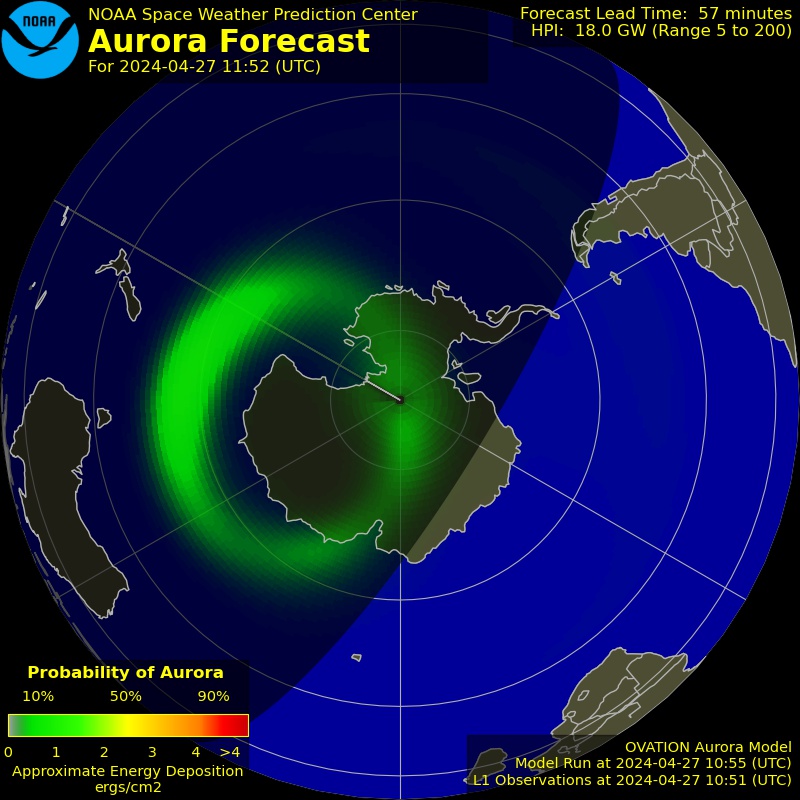
Planning a run tonight? Check the live Southern Hemisphere aurora forecast and current Kp readings below. Higher Kp (5+) usually means a chance of visibility across parts of Australia — aim for dark skies and a clear southern horizon. If you need a game plan, skim the location tips in this guide, then jump down here when conditions spike.
This is NOAA’s polar projection — Antarctica sits in the middle and Australia wraps around the edge. It’s the most reliable quick-look map for Southern Lights activity. The image below auto-refreshes every 5 minutes.
Kp is the quick indicator of storm strength. Kp 5–6 can bring a faint southern glow; Kp 7+ is where South Australia starts getting real chances from dark sites. The chart below auto-refreshes every 3 minutes.
Live Kp
Pulled from NOAA SWPC's live planetary K-index data. Kp 5+ means geomagnetic storm conditions; Kp 7+ is where mainland Australian aurora chances get more interesting from dark southern sites.
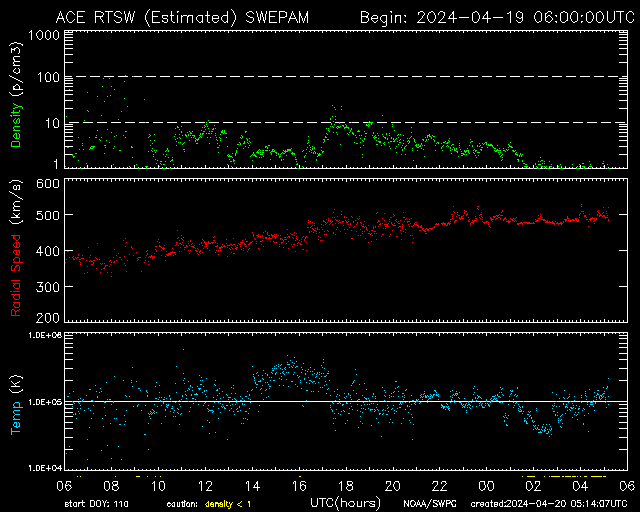
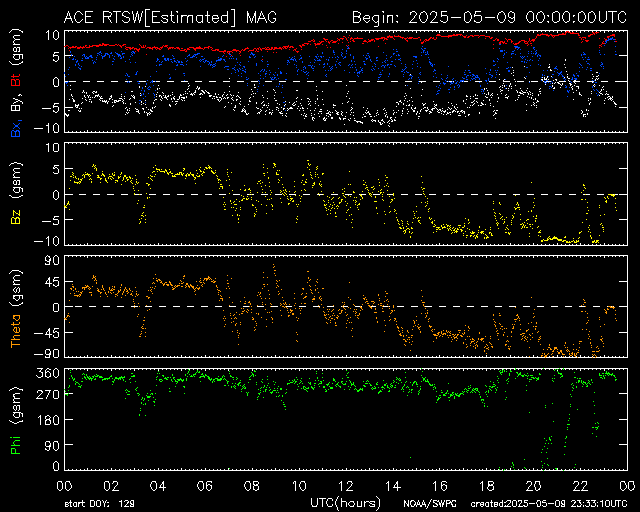
Faster solar wind (>500 km/s) and southward Bz (negative values) both boost aurora chances. These long-running NOAA plots update frequently and are a solid “should I head out?” check. Images auto-refresh every 5 minutes.

The most reliable spot is Tasmania, but during strong solar storms (Kp 7+), the lights can reach as far north as Victoria and South Australia. Coastal locations with a clear southern horizon, like Yorke Peninsula, Kangaroo Island, or the Fleurieu, give the best chance. Avoid city lights at all costs.
Peak chances are during winter (May–August), especially around new moons. Equinox months — March and September — also tend to fire up. If you’re heading north, combine it with a trip to the Barossa or the Flinders Ranges for a full outback night-sky adventure.
Yes, but it depends on how strong the storm is. At Kp 5–6 you’ll see faint glows on the horizon. Kp 7+ events can light up the whole sky in greens and purples without needing a camera. It’s similar to how controlled lighting transforms night event photography — intensity makes all the difference.
A DSLR or mirrorless with manual settings, a wide fast lens (f/2.8 or faster), a sturdy tripod, remote shutter, and spare batteries. The kit isn’t too different from what I use for twilight property photography — stability and control over exposure are everything.
Try ISO 1600–3200, f/2.8, and a 10–20 second exposure. If the aurora is moving quickly, shorten the shutter speed to keep it crisp. It’s a similar trial-and-error approach to industrial shoots in tricky lighting — you adjust until the scene feels right.
Check the Kp index (5+ means chances are good), look at magnetometer data, and follow aurora apps or alert groups. I also post updates on @whyphotographytho when conditions look promising for South Australia.
Only during major solar storms (Kp 7+). For the best chance, head just outside the city — Adelaide Hills, Riverland, or Yorke Peninsula. Think of it like scouting a drone photography location — the darker and wider the horizon, the better.
Forecasts more than a week out aren’t reliable, but short-term predictions (24–72 hours) are usually spot on. Just like preparing for trade shows or expos, the closer you get to the date, the clearer the picture becomes.
To your eyes, faint auroras look like greyish or green glows. Cameras, with long exposure, bring out the full colour and detail. That’s why my shots look bolder than what you might see live — similar to how professional lighting changes the results in a boudoir shoot.
No — Tasmania is great, but South Australia and Victoria get plenty of action during strong storms. Plus, spots like Kangaroo Island and the Fleurieu can double as stunning backdrops for portrait sessions or destination weddings.
Use a low-powered torch or headlamp to softly light their face, or shoot them as silhouettes. Keep exposures short to avoid blur. The balancing act is similar to lighting corporate headshots — shadow and highlight control is everything.
I cover a wide range: headshots, events, commercial projects, real estate, boudoir, and drone work. You can browse my recent projects for real examples.

Camera Body: A DSLR or mirrorless with decent high-ISO performance. If it can handle low-light receptions, it can handle an aurora.
Lens: Wide (14–24mm) and fast (f/1.4–f/2.8). Same thinking you’d apply when shooting interiors for real estate listings.
Tripod: Rock solid, no exceptions.
Other Stuff: Spare batteries, remote shutter, headlamp with red light, gloves you can still fiddle with camera settings in.
Camera Body: A DSLR or mirrorless with decent high-ISO performance. If it can handle low-light receptions, it can handle an aurora.
Lens: Wide (14–24mm) and fast (f/1.4–f/2.8). Same thinking you’d apply when shooting interiors for real estate listings.
Tripod: Rock solid, no exceptions.
Other Stuff: Spare batteries, remote shutter, headlamp with red light, gloves you can still fiddle with camera settings in.

Plain horizon shots get old fast. Build your frame with:
Foreground elements like trees, rocks, or water.
Silhouettes of people for scale.
Reflections in lakes, wet sand, or even your car bonnet.
It’s the same storytelling mindset I bring to weddings, events, or even real estate photography. Don’t just capture the “thing” — capture the story around it.
Want to up the ante? Shoot a sequence of long exposures for a time-lapse. The aurora looks unreal when played back as moving ribbons across the sky.
Think of it like producing a statewide commercial video project. The idea is the same: steady, consistent frames that come together later to tell a story.
Want to be in the photo yourself?
Light your subject faintly (headlamp, phone torch bounced off something).
Use shorter exposures so they don’t blur into ghosts.
Position them as silhouettes for drama.
It’s essentially low-light headshot work with the best natural backdrop you’ll ever get.

Clouds will break your heart.
The cold makes everything harder — batteries, fingers, and focus.
You’ll probably eat half your snacks before it even gets dark.
Don’t jinx it by saying “this looks promising.” The aurora gods are listening.
It’s the same unpredictability I deal with at corporate awards nights or dance competitions. You control what you can, then just roll with whatever happens.
Because when it happens, you’ll never forget it. The first time I saw a strong aurora in SA, I froze — literally and figuratively. I was so gobsmacked I forgot to press the shutter. That moment meant more than the photos did.
Even if you don’t catch the aurora, you’ll come home with killer night skies, star trails, and some solid practice at shooting outside your comfort zone. Those same skills carry over to everything from weddings to real estate jobs.
Whether you’re chasing the lights, planning a shoot in Adelaide, or just want to talk through options, it all comes down to knowing your gear and showing up prepared.
👉 Contact Shameless Visuals to lock in your next session.
Long-range dates help you plan nights off. The PDF is what you use when the alert fires: what to check, where to stand, how to focus, and what settings to start with. Save it locally before you head for the coast, hills or dark-sky pullouts where reception is patchy.
If you found this guide through the aurora forecast, these are the closest related services and project pages worth keeping nearby.
Checkout is handled by Stripe. After payment you get the download page immediately and a secure email link for the PDF. First-month launch price is AUD $14.99.

Ready to capture the day properly?
Make the plan simple.
Planning a wedding, event or commercial shoot? Use the contact page to send the details, dates and location. Corey will reply with the next practical step.